


According to the World Health Organization, one fifth of the world's population suffers from fungal infections.
In many developed countries, the figure is 25 percent.
In civilized countries with health insurance, treatment of diseases is increasingly considered mandatory: fungus is a social disease, partly an urban disease.
Oddly enough, fungal infections can also be dangerous for people who lead healthy lifestyles.
You can get fungal infections in gyms, beauty salons, beaches, swimming pools, saunas.The main causes of infection are violations of basic hygiene rules and a sharp decline in immunity.
- All diseases in this group are caused by pathogenic fungi.
- The fungus appears on the skin and nails of the toes; less commonly, the skin and nails of the fingers, armpits, and skin in the groin area are affected.
- Nails with onychomycosis begin to peel, chip, and become discolored.
- The affected area may become painful and may itch around the area.
- For infection to occur, high enough temperature and humidity are required for the skin of the feet to come into contact with the fungus.
- This fungus can be inherited, and its manifestations often become a family problem.
- Nail damage in children is rare; it occurs mostly in adults and older adults, but even a single infection in childhood cannot be ignored and does not require medical attention.
- Age-related changes in nail and skin pH, chronic diseases: diabetes, obesity, leg circulation disorders, gastrointestinal disorders, thyroid and adrenal problems, contribute to the development of this disease.
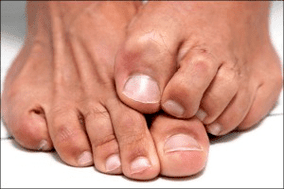
The presence of fungus should be treated with great caution and a complete cure should be attempted as soon as the first symptoms appear.
The more advanced the disease, the more difficult it is to treat: keratinized and hardened nails are extremely difficult to remove.
Advanced forms of fungus, including onychomycosis, can significantly reduce the body's overall resistance.
Toenail fungus is elastic; it takes at least 20 minutes to completely remove it from shoes (1% formaldehyde solution).Disinfecting household items with chloramine takes about an hour.
For advanced forms, treatment times are longer and require patience and discipline.We cannot talk about a complete cure after the symptoms disappear, but only after examination results and medical treatment.
How to treat onychomycosis
If you treat fungal symptoms on your feet and big toenails using knowledge gleaned from television commercials, the likelihood of recurrence, including nail infections, increases dramatically.
Toenail fungus is treated by a dermatologist; you need to see him at least once to be examined and diagnosed.Your doctor must make a final conclusion on how to treat onychomycosis in your case, whether to use topical medications, or whether it will be a waste of time and money.
When the nails are already damaged, the main principle of serious treatment is a combination of topical, targeted medications and oral tablets that affect the infection through the bloodstream.
- After many attempts at self-medication, the fungus may mutate and become resistant to the medication.
- Antifungal medications (topicals and tablets) are toxic; only a doctor can prescribe the right treatment plan that is as gentle on the body as possible without overdosing it.
- Only a doctor can take into account all contraindications.For example, liver and kidney failure may worsen dramatically in patients who self-treat.
A complex step-by-step approach can cure onychomycosis in 2-4 months.The general principle is that treatment should be implemented as quickly as possible using high doses of medication.In this case, long pauses are required between lessons.
topical treatment
Almost everyone starts topical treatments at the first (acute) appearance of onychomycosis, but few follow through.Local treatment should be initiated after diagnosis.
Toenail fungus can be treated with specialized topical medications only in the early stages of the pathology.
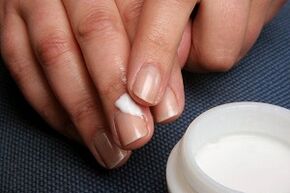
Antifungal ointments are used twice daily and the affected area must be cleaned and removed before each application.Varnish mainly affects the nail plate.Once inside, their efficiency decreases significantly.
Before starting complex treatment, your doctor will most likely recommend that you purchase a special kit for disinfecting the nail, removing the affected area or the entire nail, and cleaning the cavity.The composition includes a spatula, antifungal plaster, ointment, alcohol or iodine solution.
In large cities, onychomycosis can be successfully treated with laser therapy in well-equipped medical centers.With this method, there is no need to remove the affected nail.
systemic treatment
A combination of topical medications that affect the fungus and tablets are most effective.Full recovery is guaranteed.If you follow hygiene practices, there's a 100 percent chance that fungus won't be a problem for the rest of your life.There are many medications for onychomycosis.
All of this affects not just the fungus, but the entire body, disrupting the microflora, putting additional stress on the liver and kidneys, and endangering the gastrointestinal tract.

The efforts of doctors today are aimed at minimizing the damage done to the body and giving it a chance of recovery.
For this purpose, a treatment protocol called pulse therapy was created.
In addition to topical medications, tablets are taken twice a day for a week.The medication was then suspended for three weeks.During this time, you need to take advantage of every opportunity to heal and restore your body.Then comes a new weekly session, then another break.The number of courses is at least three.
The treatment regimen used for combined tablet and cream therapy is roughly the same (tablets for intermittent use, cream for continuous use).
What is the best treatment for onychomycosis?
The thing about antifungal treatment is that the most effective treatments will be the most effective if the patient realizes that most of the treatment is usually done by themselves.
If he was going to cure the fungus once and for all, he had to plan it out, find the time and energy, and have the determination not to give up halfway.
Treatment takes a long time.The body experiences additional stress due to the ingestion of toxic drugs.Your lifestyle should be as healthy as possible at this time.If possible, all additional risks (alcohol, smoking, lack of sleep, stress) are eliminated.A healthy diet is a must.Hygiene during and after treatment should be a priority.
If all the conditions are met, you can give up hope and follow the pulse treatment regimen prescribed by your doctor, which guarantees a complete recovery.
In preparation for starting complex treatments, the use of traditional medicine can help further improve physical health and improve the condition of nails and feet.